Unlocking Every Child's Unique Potential - Expert Speech, Occupational & Vision Therapy for Tamil Children – Accessible Globally
A holistic, multidisciplinary approach to Autism (ASD), ADHD, and Learning Disabilities. We combine Speech, OT, and Vision therapy under one roof. Don't let distance stop your child's progress. Get culturally sensitive therapy from certified professionals in Tirunelveli
Why a Multidisciplinary Approach?
Developmental challenges rarely come alone. A child with speech delay may also have sensory issues. A child struggling to write may have a vision processing issue, not just weak hands.
Integrated Care: Our Speech Pathologists, Occupational Therapists, and Vision experts collaborate on one care plan for your child.
Early Intervention: We specialize in children aged 2-5, utilizing the brain's neuroplasticity for maximum progress.
Parent-Centric: We train you to be the co-therapist at home (crucial for our NRI/Online families).
Speech Therapy
Finding Their Voice "For children with Autism or Speech Delays, communication is the key to reducing frustration
Expressive Language: Helping non-verbal or "late talking" children express their needs using words, signs, or pictures to reduce frustration
Social Communication: Teaching the "rules" of interaction—like eye contact, turn-taking, and facial expressions—vital for making friends
Articulation & Clarity: Correcting unclear speech sounds (slurring or lisping) so your child is easily understood by teachers and peers
Receptive Language: Training children to process questions ("Who, What, Where"), follow instructions, and grasp concepts like colors and sizes




Fluency (Stuttering): Specialized pacing techniques to manage stammering and build confidence for public speaking and interviews
Swallowing Therapy (Dysphagia): Rehabilitation for post-stroke patients to strengthen throat muscles and ensure safe eating and drinking
Stroke Rehabilitation (Aphasia): Helping stroke survivors "find their words" again and regain the ability to read, write, and converse
Voice Therapy: Exercises to restore clear voice quality for teachers and professionals suffering from hoarseness or vocal strain
For Adults & Medical Rehab
Occupational Therapy (OT)
OT helps children with ADHD and Autism make sense of the world around them and perform daily tasks independently
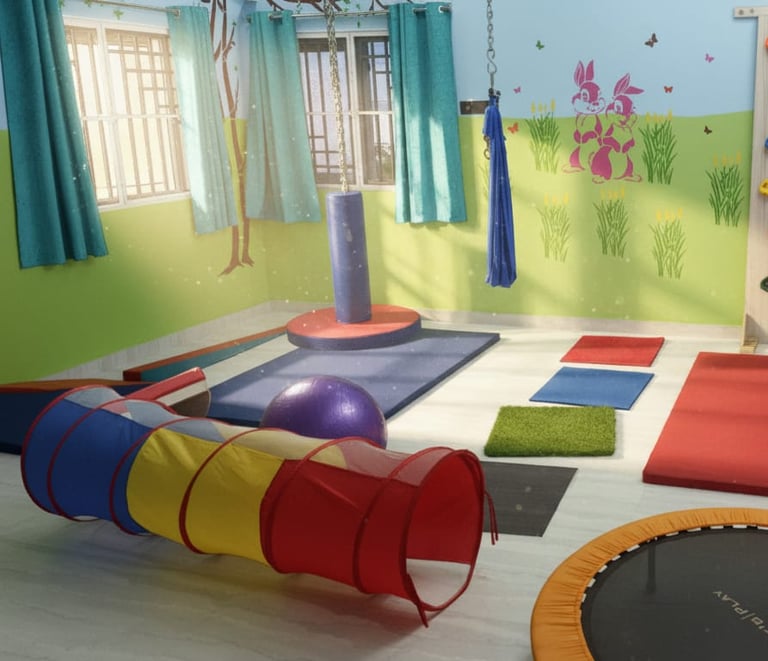
Sensory Integration: Customized "Sensory Diets" to help children regulate their response to noise, touch, textures, and movement (vestibular/proprioceptive inputs)
Fine Motor & Handwriting: Strengthening fingers and hand muscles to improve pencil grip, handwriting legibility, scissor skills, and manipulating small objects
Gross Motor & Coordination: Exercises to improve core strength, balance, and body awareness. Essential for children who appear "clumsy" or struggle with sports and running
Activities of Daily Living (ADL): Training for independence in self-care tasks—such as toilet training, brushing teeth, buttoning shirts, tying shoelaces, and eating without mess
Attention & Executive Function: Strategies to improve sitting tolerance, following multi-step instructions, and organizing schoolwork for children with ADHD
Emotional Regulation: Teaching children to identify their emotions and use coping tools to manage anxiety, anger, and meltdowns effectively
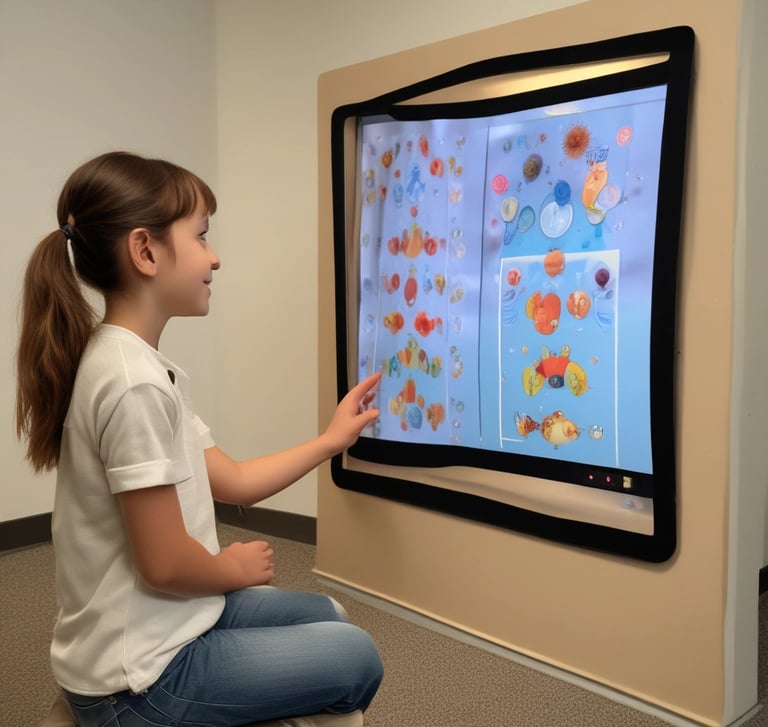
Visual-Motor Integration: Improving Hand-Eye coordination required for tasks like catching a ball, copying from a blackboard, or solving puzzles
Play Skills: Guiding children to move from solitary play to interactive, functional play with peers, which fosters social development


Vision Therapy
Beyond 20/20 Vision "Did you know 80% of learning is visual? Many children with Learning Disabilities (LD) or ADHD struggle not with seeing, but with processing visual information
Eye Tracking & Teaming: Training the eyes to move smoothly across a page. This prevents skipping lines, re-reading words, and losing one's place while reading
Visual-Motor Integration: Strengthening the connection between eyes and hands. Essential for legible handwriting, copying from the blackboard, and catching a ball
Lazy Eye (Amblyopia) Correction: Using specialized exercises and binocular games to strengthen the "weaker" eye and restore clear, balanced vision without surgery
Focus Flexibility (Accommodation): Improving the ability to quickly switch focus from a distant blackboard to a nearby notebook without the vision blurring
Convergence Insufficiency: Treating eyes that drift outward during near tasks. This eliminates eye strain, headaches, and double vision often experienced after reading
Visual Memory & Recall: Helping children retain mental images of what they see, which is vital for remembering spelling words and recognizing sight words instantly
Visual Perception & Reversals: Correcting common issues like confusing 'b' vs 'd' or 'p' vs 'q', and improving the ability to solve puzzles and identify shapes
Depth Perception (3D Vision): Enhancing spatial awareness to prevent clumsiness (bumping into things) and improve performance in sports and play
FAQ
Q: My child is only 2 years old. Is it too early?
A: Never. The age of 2-5 is the "Golden Period" for brain development. Early intervention yields the fastest and most permanent results.
Q: How do I know if my child needs OT or Speech Therapy?
A: If your child is not meeting milestones (like pointing, speaking 2-word sentences by age 2) or has sensory sensitivities (covers ears, dislikes textures), an assessment is recommended.
Q: Can Vision Therapy help with my child's handwriting?
A: Yes. Poor handwriting is often a result of poor eye-hand coordination, which vision therapy specifically targets.
Q: Does Online Speech Therapy really work for a 3-year-old?
A: Yes. For toddlers, we use a "Parent-Coaching Model." Our therapists guide you (the parent) in real-time on how to engage your child using their own toys and home environment. This is often more effective than direct therapy because you can practice strategies all day, not just during the session.
Q: My child ignores me when I call their name. Is it Autism or Hearing Loss?
A: It can be difficult to tell the difference. That is why our clinic is unique—we can perform a Hearing Test (Audiometry) first to rule out any hearing issues. If hearing is normal, our therapists will assess for social communication delays or Autism.
Q: Why does my child need Occupational Therapy (OT) for a Speech problem?
A: Communication requires focus and regulation. If a child is hyperactive, sensory-seeking, or cannot sit still, they cannot attend to speech lessons. OT helps "organize" their sensory system, making them calm and ready to learn language.
Q: How long will my child need therapy?
A: There is no single answer, as every child learns at their own pace. However, consistent attendance (2-3 times a week) and practicing home exercises significantly speed up progress.
Q: My child speaks, but only repeats what I say (Echolalia). Is this normal?
A: Repeating words (Echolalia) is a common stage in language development, but if it persists beyond age 2.5 or is the only way they communicate, it requires intervention. We teach them to break down those "scripts" into meaningful, independent speech.
Q: Do I need a doctor's referral to book an assessment?
A: No. You can book an appointment directly with us. However, if you have reports from a Pediatrician, Neurologist, or School Teacher, please bring them along to help us understand your child's history better.
Contact
Visit Us: CommuniKonnect Multidisciplinary Clinic
Address: No. 76A/1, IOB Colony Extension (Enroute to St. Antony's Public School), Maharajanagar, Tirunelveli - 627011.
Phone: +91 93619 18001